1to30 · Website Redesign
Here’s the uncomfortable truth about small business website redesigns: most of what’s sold under that label was designed for companies twenty times your size. Discovery workshops, stakeholder interviews, brand strategy phases, 40-page sitemaps — that process exists because enterprise projects need it. Your business doesn’t. You need a website that makes the phone ring, and you need it without a three-month project attached.
This guide covers what a small business site actually requires, what you can safely skip, what a fair price looks like, and the fastest route from “our site embarrasses us” to a website you send people to on purpose.
Why Small Business Redesigns Go Wrong
The failure mode is almost never bad design — it’s buying the wrong size of project. Agencies structure redesigns around process because process is what large clients need (and what justifies large invoices): alignment meetings for stakeholders you don’t have, strategy phases for a positioning you could explain in two sentences, sitemaps for content you’ll never write.
The result: small businesses either overpay for enterprise process, or — burned by a quote — swing to the other extreme and DIY a template site that undersells them. The right answer sits in the middle: professional design and build, minus the process built for someone else.
The 5 Pages a Small Business Website Actually Needs
A small business website has one job: turn a visitor into an enquiry. That takes five pages — sometimes fewer:
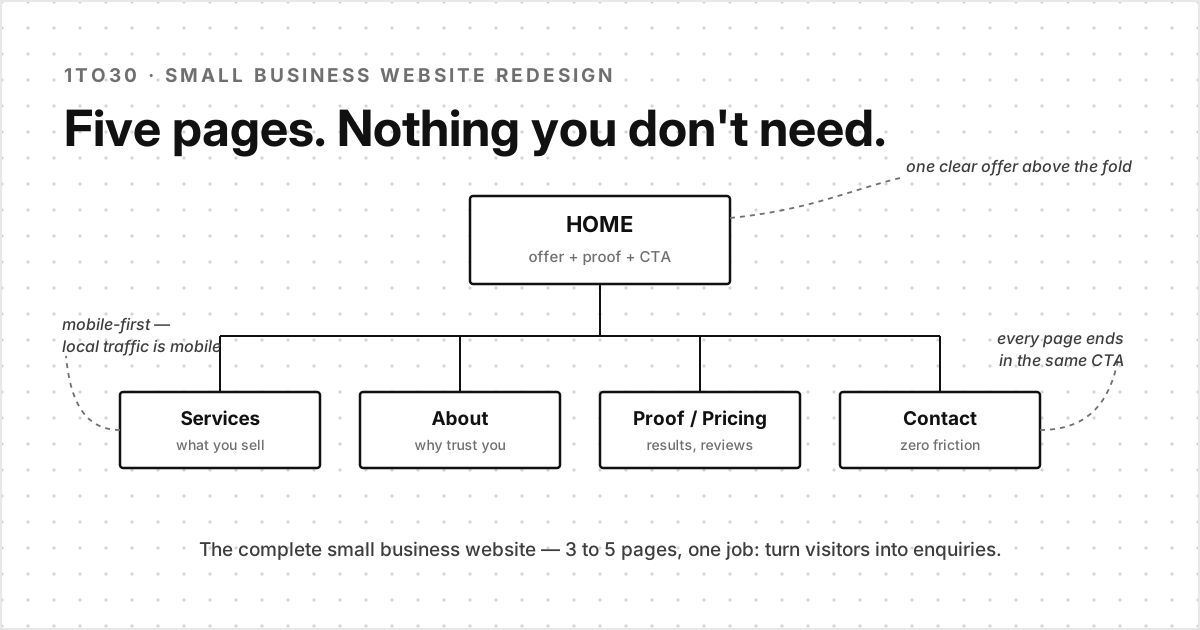
- Home — one clear offer above the fold (“we do X for Y”), proof right behind it, one call to action. A visitor should know what you do within five seconds.
- Services — what you sell, in your customer’s words, each service ending in the same CTA.
- About — why trust you: the people, the story, the credentials. Small businesses win on trust; this page does more work than most owners think.
- Proof / Pricing — reviews, results, recognizable clients, and (if your market allows) pricing. Transparency filters out bad-fit enquiries before they cost you time.
- Contact — zero friction: form, phone, hours, location. And a contact path repeated on every other page, not hidden behind a menu item.
Cross-cutting requirements: mobile-first (most local and referral traffic is typically mobile), fast (a slow site loses the click you paid for), and basic on-page SEO — clean titles, structure, and local signals.
What You Can Safely Skip
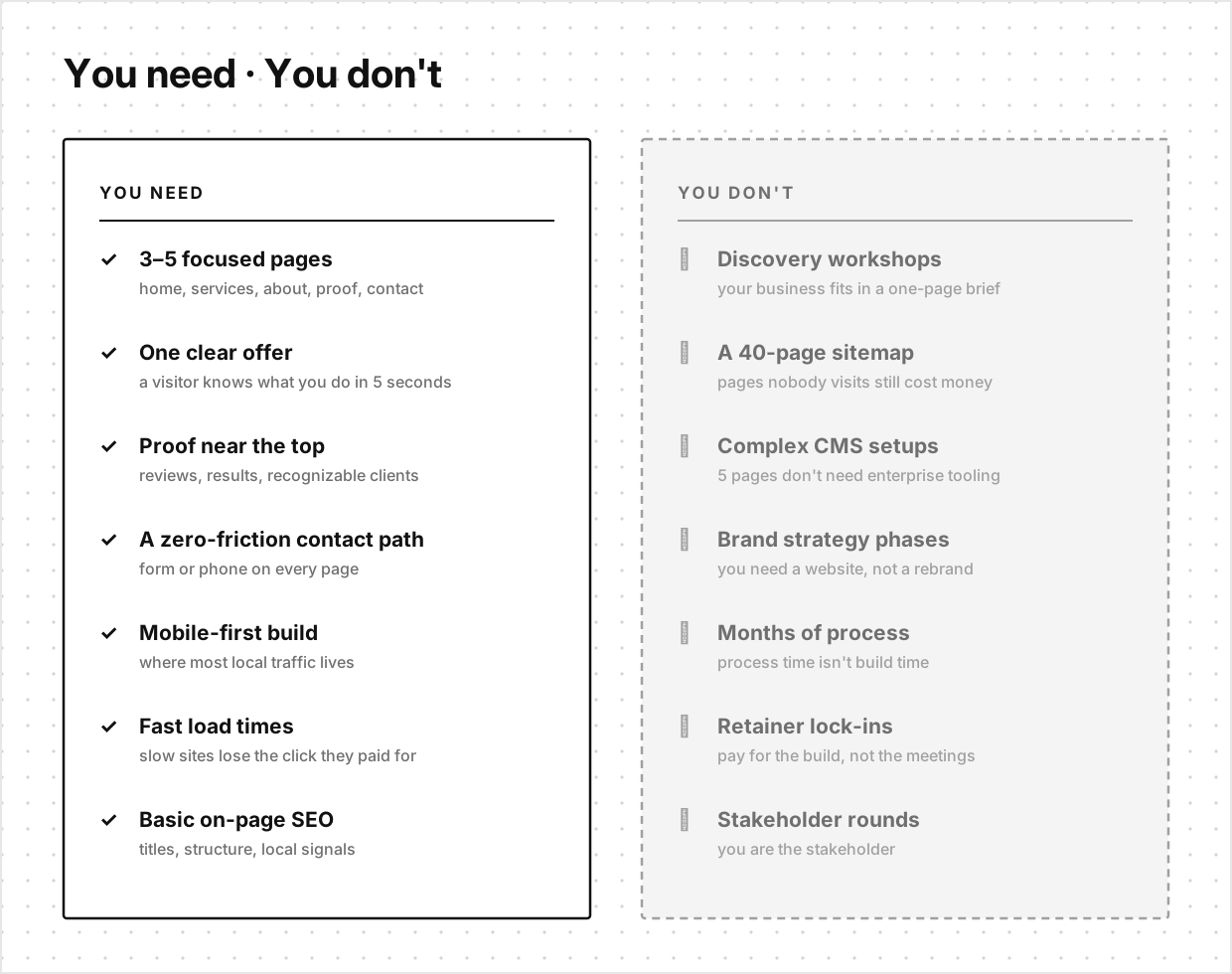
Every item on the right column adds cost and weeks — and for a 3–5 page site, none of it changes the outcome: discovery workshops (your business fits in a one-page brief), a 40-page sitemap (pages nobody visits still cost money to design), complex CMS setups (five pages don’t need enterprise tooling), brand strategy phases (you need a website, not a rebrand), and retainer lock-ins (pay for the build, not for meetings).
If a proposal includes these for a five-page site, you’re not buying a better website — you’re buying someone else’s process. The test is simple: for every line item, ask what changes on the finished website if it’s removed. If the answer is “nothing,” it’s process.
“For a five-page website, the build takes days. What takes months is the process wrapped around it.”
What Should It Cost?
Market ranges in 2026: DIY/site builders run a few hundred to $5,000; freelancers roughly $2,000–$10,000; agencies typically start around $5,000 and reach $15,000+ even for small sites once process is included. The professional corridor for a quality 3–5 page redesign is $3,000–$15,000 — full numbers, hidden costs, and a price calculator are in our website redesign cost guide.
The 1to30 Website Redesign sits inside that corridor at a standard build price of $9,999 for up to 5 pages (from $9,999 — a larger scope gets a written price confirmation before you pay) — with a difference in when you commit: your 1to30 partner prepares a preview with 3 personalized homepage directions (optionally all 30 — $299, fully credited), and you only pay for the build after one of them convinces you.
The Timeline: Days, Not Months
Here’s what agencies don’t advertise: for a five-page website, the build itself takes days. What takes 6–12 weeks is everything wrapped around it — discovery, proposal, one or two concepts, revision cycles, approval rounds.
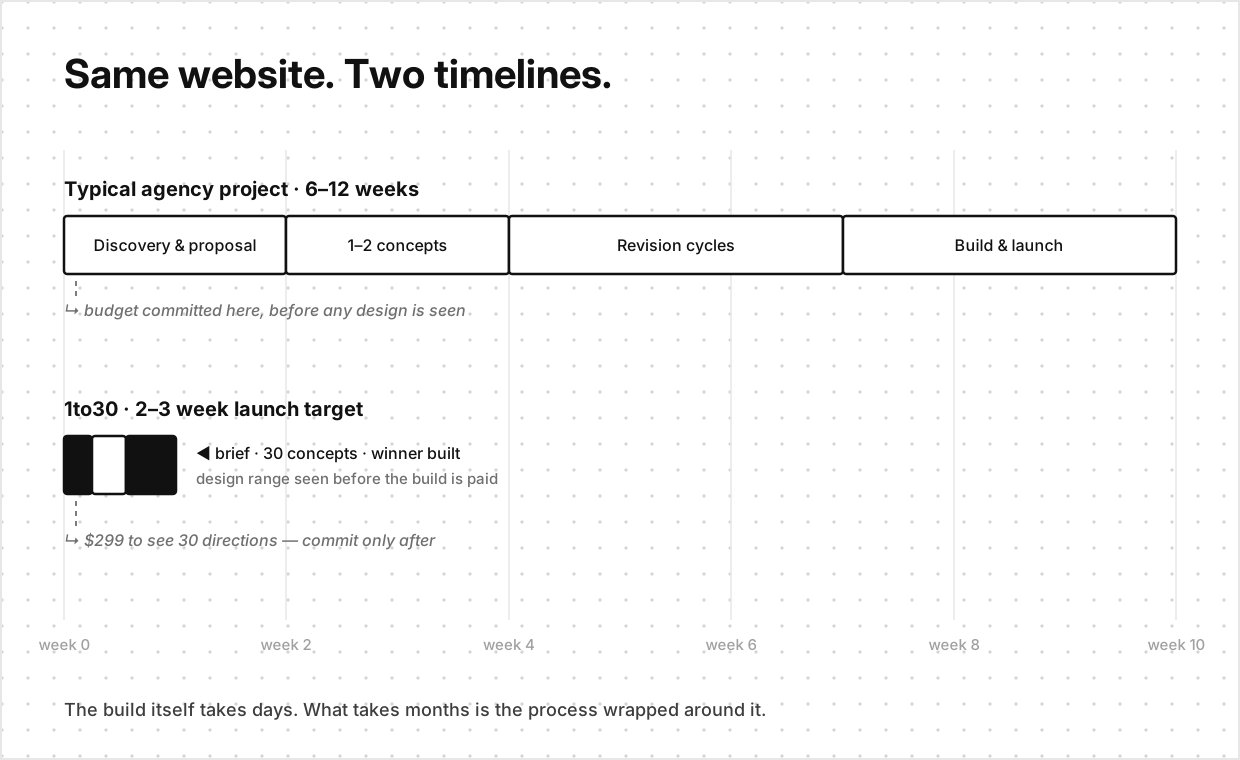
The 1to30 timeline for comparison: a short async brief prepared with your 1to30 partner (~10 minutes of your time), personalized directions back, you pick the winner, and the complete site launches within a 2–3 week target after brief, content, and selection are in. Same deliverable, minus the calendar overhead — because there are no meetings to schedule in the first place.
Your Options, Compared
| Route | Cost | Timeline | The catch |
|---|---|---|---|
| DIY / site builder | $0–$5,000 + your weekends | Whenever you finish | Template look, your time, results undersell you |
| Freelancer | $2,000–$10,000 | 3–8 weeks | One design direction; quality and availability vary |
| Agency | $5,000–$40,000+ | 6–12 weeks | Enterprise process at small business prices |
| 1to30 (productized) | From $9,999 (standard build $9,999) | 2–3 week launch target | Focused scope: up to 5 pages; shops and custom CMS rebuilds excluded (optional WordPress add-on) |
How the 1to30 Model Fits Small Businesses
The honest pitch, scope included: 1to30 is built for exactly this project size — service companies, local businesses, B2B, founder-led brands that need a sharp 3–5 page site. The mechanics: your 1to30 partner submits a short brief, you get a preview with 3 personalized homepage directions (optionally all 30), pick the winner, and it’s built into your complete website — custom-coded (or with an optional Editable WordPress CMS), content migrated, contact form, SSL, and one revision round, for a standard build price of $9,999 — confirmed in writing and paid 40/30/30. After launch, your site runs on Managed Care from $249/month. A Care plan is required with the full website build.
Equally honest about what it isn’t: no e-commerce checkouts, member areas, booking systems, or rebuilds inside your existing CMS (the editable WordPress add-on is the optional route if you need a CMS). If you need those, a specialized developer is the better route. If you don’t — and most small business sites don’t — you skip every item on the “safely skip” list above and keep the part that matters: seeing real design directions before committing your budget.
Mistakes Small Businesses Make in a Redesign
- Judging providers by their portfolio’s biggest logo — you’ll get the junior team and the senior price
- Writing content last — content delays cause more launch slips than design ever does; start it the day you start the project
- Adding pages “while we’re at it” — every extra page dilutes the site’s one job
- Skipping redirects — if URLs change without 301s, you donate your Google rankings to competitors
- Choosing on price alone in either direction — the $500 site and the $40,000 site are both usually the wrong purchase for a small business
Small Business Website Redesign: FAQ
How much does a small business website redesign cost? A professional 3–5 page redesign typically runs $3,000–$15,000. The 1to30 standard build is $9,999 for up to 5 pages (from $9,999; larger scopes are confirmed in writing first), starting with a partner-prepared preview of 3 directions (unlocking all 30 is optional — $299, fully credited).
How many pages does a small business website need? Three to five: Home, Services, About, Proof/Pricing, Contact. More pages rarely add enquiries — they add cost and maintenance.
How long should it take? A focused productized process can reduce the timeline significantly. The current 1to30 delivery target is 2–3 weeks after all required inputs and the concept selection are complete.
Can I just refresh my current site instead? If the structure works and it’s mobile-friendly, a visual refresh can be enough. If the site is structurally outdated — no clear offer, weak mobile, no conversion path — a refresh polishes the wrong foundation.
Will I lose my Google rankings? Rankings can move after any redesign. The usual risk-reduction steps are mapping and 301-redirecting changed URLs, preserving titles and content structure on ranking pages, and watching Search Console after launch. No redesign can guarantee unchanged rankings.
Do I need WordPress? Not necessarily. For a 3–5 page site, custom-coded pages are fast and secure. If you’ll edit content yourself, 1to30 offers an optional Editable WordPress CMS add-on.
The Bottom Line
A small business website redesign is a small, sharp project: five pages, one job, days of build time, and a fair price between $3,000 and $15,000. Everything sold on top of that — workshops, strategy phases, sitemaps you’ll never fill — is enterprise process wearing a small business price tag.
See the complete offer →New 1to30 projects start through a partner who prepares a personal preview with 3 directions. Pick the winner — the standard build is $9,999 for up to 5 pages (from $9,999), paid 40/30/30, with Managed Care from $249/month starting at launch. Work with clients yourself? Become a 1to30 partner →